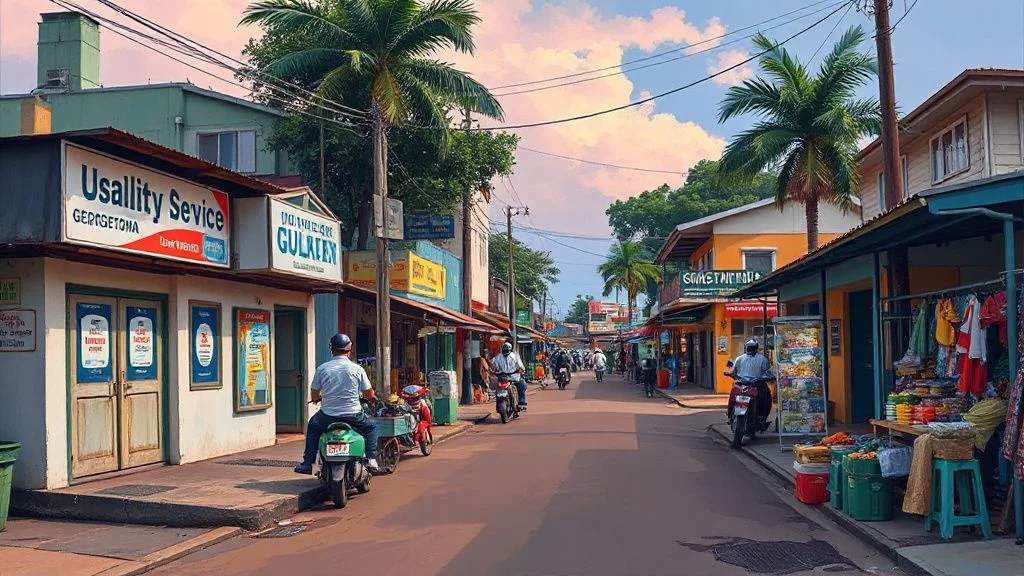
Relocating to Guyana can be an exciting yet overwhelming experience, especially when it comes to setting up your new life. One of the first things you'll need to tackle is opening utility accounts for essential services like electricity, water, and internet. This guide provides a detailed walkthrough of the process, including required documents, typical costs, and tips to navigate the local landscape effectively.
Understanding Utility Services in Guyana
In Guyana, key utility services include electricity, water, and internet. Electricity is primarily provided by Guyana Power and Light (GPL), while the Guyana Water Inc. (GWI) oversees water supply. Internet and telecommunications services are offered by multiple providers, including local companies and branches of international firms. Understanding these providers and their offerings can help you make informed decisions when establishing your utility accounts.
Electricity: Guyana Power and Light (GPL)
Guyana Power and Light (GPL) is the main electricity supplier in the country, operating across most regions. When you move to Georgetown, opening an account with GPL is essential for power access. The application process typically requires a few key documents, including a valid form of identification (such as a passport or driver's license) and proof of residence, which can be a lease agreement or a recent utility bill. A deposit is often required, which can vary based on the type of service you choose.
While costs can vary based on usage, it is advisable to inquire about average monthly residential electricity expenses to help you budget effectively. It’s wise to ask about energy-saving practices to keep your bill manageable, especially if you're used to lower rates in North America or the UK.
Water: Guyana Water Inc. (GWI)
Guyana Water Inc. (GWI) is responsible for water supply across the country. To set up a water account, you'll need to provide similar documentation as required by GPL—such as identification and proof of address. GWI also requires a deposit for residential accounts, which may vary.
Monthly water costs are generally lower than electricity. It’s important to note that water supply can be inconsistent in some areas, especially during the dry season, so be sure to ask your neighbors about the reliability of service in your specific locality.
Setting Up Internet and Telecommunications Accounts
Internet service in Guyana is provided by several companies, including local and international providers. Options generally include DSL, fiber-optic, and mobile broadband services. When choosing a provider, consider your internet needs—such as speed and data usage—as well as the provider’s customer service reputation.
To open an internet account, you will usually need to present a valid ID and proof of residence. Most providers also require a deposit that can vary depending on the type of service you opt for. Monthly costs can vary widely based on your chosen plan, so it is advisable to inquire about the options available to find one that suits your needs.
Common Internet Providers
Some common internet providers include local firms that often cater to residential and business clients. When evaluating services, consider factors that are important to you, such as customer service responsiveness, installation fees, and promotional offers. It can be helpful to ask locals or fellow expatriates for recommendations based on their experiences.
Required Documentation for Opening Utility Accounts
Regardless of the utility service you are setting up, you will generally need the following documents:
- A valid form of identification (passport, national ID card, or driver's license).
- Proof of address, such as a lease agreement or a recent utility bill.
- A Taxpayer Identification Number (TIN) if you are a local resident.
- For expatriates, an employment contract or confirmation from your employer in Guyana may also be necessary.
It’s advisable to have these documents ready before heading to the utility provider’s office to streamline the process. Some companies may allow you to start the application online, but visiting in person can often expedite the setup.
Practical Tips for Expats
Opening utility accounts in a new country can be complex, but here are some practical tips to make the process smoother:
- Visit During Off-Peak Hours: Utility offices can get crowded, particularly at the beginning of the month. Visiting during mid-week, preferably in the morning, may save you time.
- Network with Locals: Engaging with local residents or other expatriates can provide valuable insights about service reliability and customer service experiences with different providers.
- Be Prepared for a Different Pace: Processes in Guyana may take longer than what you are accustomed to in North America or the UK. Patience is key as you navigate the system.
- Use Local Currency: Always keep in mind the conversion rate for budgeting your utility expenses. This will help you manage your finances better and avoid confusion.
Conclusion
Establishing utility accounts in Guyana is a critical step in making your new home comfortable and functional. By understanding the providers, required documentation, and practical tips for engaging with local services, you can navigate this process with confidence. Remember to reach out to fellow expatriates for support and guidance, and don’t hesitate to ask questions as you familiarize yourself with the local utilities landscape. With a bit of preparation, you’ll quickly settle into your new life in Georgetown.
Primary Sources
Last updated: October 2026