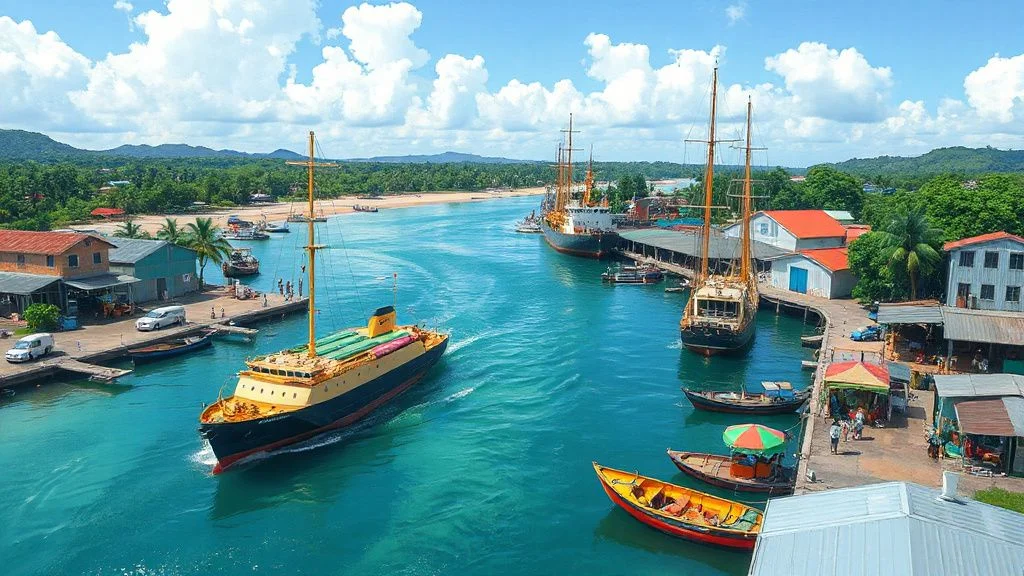
Georgetown, the capital of Guyana, serves as a vital river port positioned along the Demerara River. This strategic location plays a significant role in the shipping and logistics of goods entering and leaving the country. For expatriates and returning professionals relocating to or residing in Georgetown, understanding the implications of this river port status is crucial for seamless shipping experiences. This article delves into the unique aspects of Georgetown as a river port and how it affects the transportation of your goods.
Understanding Georgetown's River Port Dynamics
Georgetown's port is not just any port; it is a river port located at the confluence of the Demerara River and the Atlantic Ocean. This positioning offers both advantages and challenges for shipping operations. The port has been operational for decades and is equipped to handle diverse cargo types, including machinery, containerized goods, and petroleum products.
The channel depth of the Demerara River limits the size of vessels that can dock directly at the port. Typically, ships calling at Georgetown must be under 175 meters in length and have a draught not exceeding 8.2 meters. This limitation means that larger vessels must transfer their cargo to smaller feeder ships at transshipment points, often located in nearby Caribbean hubs. Therefore, understanding the size and type of your shipment is essential to avoid delays and additional costs.
Shipping Options to Georgetown
When shipping goods to Georgetown, you have several options available, each with different transit times and characteristics. For example, Less than Container Load (LCL) shipments from Miami typically take around nine days. Full Container Load (FCL) shipments can take anywhere from eight to fourteen days, depending on the port of origin. Understanding these timelines helps in planning your logistics accordingly.
Moreover, if you're shipping sensitive or critical items, air freight could be a viable option, taking just one to three days from major U.S. cities to Georgetown. However, air freight is usually more expensive than sea freight. Weighing the urgency against shipping costs is a common dilemma faced by expatriates and businesses alike.
Logistics and Customs Clearance
Shipping to Georgetown isn’t just about getting your goods to the port; it also involves navigating customs clearance. The Guyana Revenue Authority (GRA) oversees customs operations, and it uses the ASYCUDA World system to streamline processes. As an importer, you will need to register for a GRA Taxpayer Identification Number (TIN) and classify your goods under the CARICOM Common External Tariff, which governs import duties and taxes.
Typically, customs duties are calculated based on the cost, insurance, and freight (CIF) value of the goods. Additionally, a Value Added Tax (VAT) of 14% is applicable on most imports. Being aware of these financial implications can help you budget effectively for your shipments. For instance, if you are importing equipment valued at 1,000 USD, you should anticipate around 214.91 USD in VAT alone, not including any customs duties that may apply.
Timing Your Shipments
Timing is vital when shipping goods to Georgetown. The river port's capacity is often strained during peak periods, particularly when there are surges in oil and gas-related imports due to ongoing projects in the area. As an expatriate or a business looking to import goods, planning your shipment ahead of time is advisable to avoid delays. It's not uncommon for feeder vessels to reach full capacity during busy seasons, which could push your delivery timeline further back.
Moreover, having all your documentation in order before the shipment arrives can expedite the customs clearance process. Ensure that the commercial invoice, packing list, bill of lading, and any necessary import licenses are prepared ahead of time. This proactive approach can save time and reduce stress upon arrival.
Costs Associated with Shipping to Georgetown
Understanding the costs associated with shipping to Georgetown is essential for effective budgeting. Besides the shipping fees and customs duties, additional expenses may include storage fees, handling charges, and possible demurrage if your cargo is delayed at the port. The costs can add up quickly, especially for LCL shipments where consolidation and handling fees may apply.
For example, a typical LCL shipment from Miami weighing around 1,500 kg might cost approximately 1,005 USD, excluding destination duties and local charges. This figure serves as a ballpark estimate, and actual costs may vary based on the specific logistics provider, the nature of the goods, and the current market rates.
Preparing for Unexpected Costs
As an expatriate, you might encounter unforeseen circumstances that can lead to additional costs. For example, if your goods require special handling or are subject to additional inspections, this can incur extra charges. Therefore, it’s prudent to set aside a contingency fund—typically around 10-15% of your estimated shipping expenses—to cover unexpected costs that may arise during transit.
Additionally, engaging a reputable logistics provider familiar with the Georgetown port can help you navigate these complexities. Such companies often offer comprehensive services, including customs brokerage, which can simplify the process and minimize the risk of costly delays.
What Expats Should Know
For expatriates living in Georgetown, understanding the local shipping landscape can significantly impact your experience. The port's river setting means that weather conditions can also influence shipping schedules. Heavy rainfall or seasonal flooding may affect river depth and access to the port, so staying informed about local weather patterns is beneficial.
Cultural nuances can also affect shipping practices. Local customs may dictate how business is conducted, including the level of personal interaction and negotiation needed. Building relationships with local suppliers and logistics providers can facilitate smoother transactions and foster trust, which is often essential in Guyana's business landscape.
Personal Experiences of Expatriates
Many expatriates have shared stories highlighting the importance of patience and flexibility when dealing with shipments in Georgetown. For instance, one expatriate noted that he learned the hard way about the importance of planning ahead after experiencing a significant delay due to a lack of feeder space. Since then, he emphasizes the need to book shipping early, especially during peak seasons.
Another common experience involves navigating the customs process. Expatriates often recommend working closely with a customs broker who understands the local regulations and can help manage documentation more efficiently. This collaboration can eliminate much of the headache associated with international shipping.
Conclusion
Georgetown's status as a river port has far-reaching implications for anyone looking to ship goods to or from Guyana. From understanding the logistics and customs processes to preparing for potential costs and delays, being well-informed is key. Expatriates can enhance their shipping experience by planning ahead, engaging local experts, and staying adaptable to the unique challenges presented by this vibrant port city.
By taking these steps, you can ensure a smoother transition as you relocate or establish your business in Georgetown, making the most of the opportunities the growing oil and gas-driven economy has to offer.
Primary Sources
Last updated: October 2026